100% free · No sign-up · Photo stays on your device
Skin tone analyzer: tone, undertone & colors
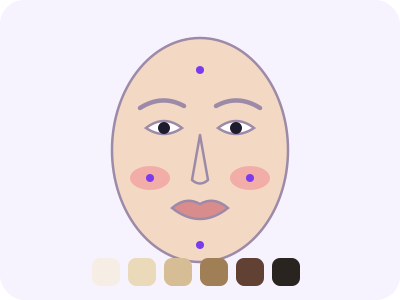
Upload a selfie in daylight and the free skin tone analyzer samples your forehead, cheeks and chin to find your skin tone and undertone, your Monk scale shade and the colors and metals that flatter you.
Loading face analyzer…
Preparing AI model (first load may take a few seconds)
How the skin tone analyzer works
Detection uses Google's MediaPipe Face Landmarker, running on your device.
- 1
Upload a daylight selfie
Face a window, no makeup or filters if possible.
- 2
Skin is sampled
Forehead, cheek and chin pixels are converted to CIELAB color.
- 3
Get your skin tone
Tone, undertone, Monk scale shade and your best colors.
Skin tone vs undertone
Skin tone is how light or deep your skin is — the analyzer places it on the 10-shade Monk Skin Tone scale. Undertone is the hue underneath: warm (golden), cool (pink), neutral (balanced) or olive (green-gold).
Your skin tone can change with a tan; your undertone doesn't. Undertone decides which colors and metals look best near your face.
Using your skin tone results day to day
Your undertone is the most useful result. Warm undertones glow in golden, olive and earthy shades; cool undertones look clearest in blue-based pinks, jewel tones and crisp white; neutral undertones can borrow from both. Olive skin often suits deep greens, golds and warm reds.
Use the swatches as a shopping filter. Hold a top in a store mirror near your face in daylight: if your skin looks even and your eyes look brighter, it's working. If shadows look grayer or redness appears, the color is fighting your undertone.
Skin tone changes with seasons and tanning, so re-run the analysis when you switch foundations. Undertone stays the same all year, which makes it the safer guide for clothes, hair color and jewelry.
Skin tone analyzer FAQ
Is it really free?
Yes. No sign-up, no watermark and no usage limits. The analysis runs in your browser.
Is my photo uploaded?
No. Detection runs locally with Google's MediaPipe model, so your photo never leaves your device.
Why does lighting matter so much?
Warm bulbs push results warmer and shade makes skin read deeper. Soft daylight from a window gives the truest reading.
What is the Monk Skin Tone scale?
A 10-shade scale published by Google to describe skin tones more inclusively than the older Fitzpatrick scale.
Can makeup affect the result?
Yes. Foundation and bronzer change the sampled color, so use a bare-skin photo.
More from StyleMirror
All free toolsKnow your undertone? Match your foundation
The foundation shade finder turns your skin reading into shades from popular brands.
Find my foundation