Waves & curls · long length
Loose curls: soft volume, worn long
Loose curls are wide-diameter, soft curls worn at length, with volume through the mid-lengths rather than tight definition at the root. They can be natural or styled, and the look depends far more on how the length is layered than on the curling itself — a one-length cut turns loose curls into a triangle.
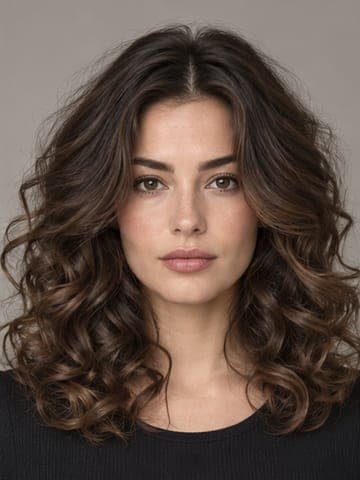
What a loose curls actually is
The defining measurement is curl diameter. Loose curls are formed around something roughly the width of a thumb or larger, which produces an S-shape with two or three bends rather than a spiral. That width is what reads as soft; tighter diameters move the look towards defined curls or spirals.
Volume sits in the mid-lengths and ends, not at the root. The roots are usually left comparatively flat or given only a little lift, which is what separates this from a blowout. The silhouette is widest somewhere between the ear and the jaw and tapers slightly towards the ends.
If your hair is naturally wavy or curly, the work is in the cut. Long layers remove the weight that drags waves straight and stop the width collecting at the bottom. If your hair is straight, the work is in the styling and in a product that will hold a wide curl without setting it hard.
How it differs from the cuts people confuse it with
| Beach waves | Beach waves are flatter and more irregular, with a matte finish. Loose curls keep a rounder, more uniform bend and usually more shine. |
|---|---|
| Hollywood waves | Hollywood waves are brushed out and pinned into one continuous glossy S down one side. Loose curls stay separated and are worn on both sides. |
| Spiral curls | Spiral curls use a much smaller diameter and hold a full corkscrew. Loose curls stop at two or three bends. |
Who it suits
Width at the jaw and below is what this shape adds, so it suits faces that are longer than they are wide. On an oblong face the horizontal volume shortens the vertical line; on a square face the rounded bends soften the corners of the jaw without covering it.
On a round face the same volume can work against you if it sits at cheek level. The fix is placement rather than avoidance: keep the curl starting below the jaw and leave the top smoother, so the widest point of the hair is well below the widest point of the face.
Naturally wavy and curly hair gets there with a cut and air-drying. Thick straight hair holds a styled curl well but needs the weight reduced first, or the curls drop within hours. Fine straight hair holds the shape for the shortest time and benefits from being set on a larger barrel than feels right, since the curl will loosen as it cools.
When not to pick it
- Your hair is one length to the waist and you want to keep it that way. Without layers, loose curls collect width at the ends and read as a triangle.
- You need the look to last two days. On fine or straight hair a styled loose curl is usually a one-day shape.
- You want low effort and your hair is straight. This is 20 to 30 minutes with heat, repeated; natural waves are a different story.
- Your hair is heavily damaged at the ends. Loose curls make split ends more visible, not less, because the bend separates the strands.
What to say in the chair
Naming the landmark and the length is what makes the request land.
- Ask for long layers with the shortest layer named: "start the shortest layer at the collarbone" keeps plenty of length.
- Say the goal out loud: "I wear it curly, not straight" changes how the stylist cuts, especially where they place the layers.
- If your hair is naturally wavy, ask for it to be cut dry or at least checked dry, so the spring-up is accounted for.
- Ask for weight removed from the interior rather than from the ends, so the perimeter stays dense and the triangle shape is avoided.
- For styled curls on straight hair, ask which barrel size suits your length — the answer is usually larger than people expect.
Terms worth knowing
- Long layers
- Layers cut with a steep angle so the length is kept and only interior weight is removed. The structural requirement for this look.
- Interior weight removal
- Thinning from inside the section so the outline stays intact. This is what stops curls widening into a triangle.
- Barrel size
- The diameter of the curling iron. For loose curls, 32mm and up; smaller barrels give spirals.
- Cool set
- Letting each curl cool in your hand before releasing it. The single biggest factor in how long a styled curl lasts.
Upkeep
| Styling time | 20–30 minutes when styled, 5 when natural |
|---|---|
| Back to the salon | 10–14 weeks |
| Effort | 3/5 · Some styling |
| What you need | A 32mm or larger curling iron, or a diffuser for natural waves · A heat protectant · A light hold mousse or curl cream |
For natural waves the routine is short: curl cream on soaking hair, scrunch, diffuse on low heat or air-dry, and do not touch it while it dries. Touching it mid-dry is what causes frizz, more than any product choice.
For styled curls the one technique that matters is the cool set — catching each curl as it comes off the iron and holding it in your palm until it is cold. A curl that is released hot drops within the hour; the same curl held for twenty seconds can last the day. Brushing the curls out afterwards with fingers rather than a brush keeps the diameter wide.
The salon interval is long because the cut is forgiving, but the ends matter more than usual. Loose curls expose split ends, so a dusting every few months does more for the look than a full restyle.
Ways it gets cut
The same name covers several shapes. These are the ones worth naming at the salon.
Natural loose curls
Your own wave or curl pattern, cut in long layers and diffused. No iron, no heat, and the shape depends entirely on how the weight was removed, which is why the cut matters more than the products.
Styled loose curls
Set on a 32mm or larger barrel, cooled in the palm, then broken up with fingers. Lasts a day on fine hair and two or three on thick hair, and gives a more uniform bend than natural curls do.
Heatless loose curls
Set overnight on a fabric rod, large rollers or loose braids on damp hair. The result is softer and less even than an iron, and it suits hair that is already damaged enough that more heat is a bad idea.
What it costs
The cut is an ordinary long-layer appointment, so it is the styling that costs: a good large-barrel iron is a one-off purchase, and the curl cream or mousse is the recurring one. If you wear your hair naturally curly, the main spend is a diffuser and a dusting of the ends every few months.
Colours that suit it
Balayage
Painted lightness that follows the length makes each bend visible; flat single-process colour can make curls read as one solid mass.
Honey blonde
Warm mid-tones catch light on the outside of each curl, which is what gives the look dimension in photographs.
Auburn
Saturated warmth holds its depth through the bends, so the shape stays legible on thick hair where lighter shades can wash out.
Before and after, same photo
One photo, one lighting setup, hair only. Comparing the two shows where the volume actually lands on your silhouette, which is the part that decides whether the shape suits a longer or a rounder face.
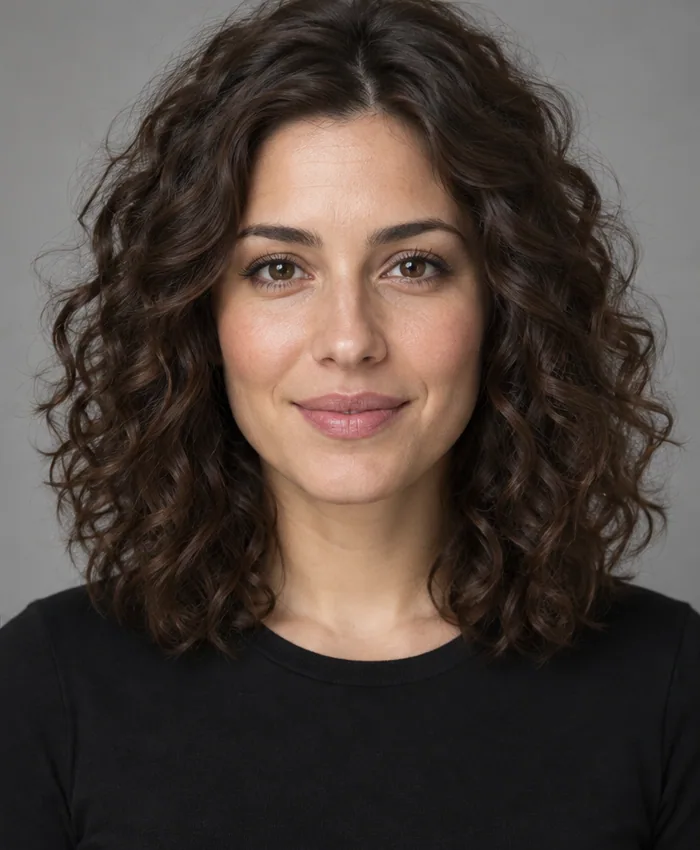
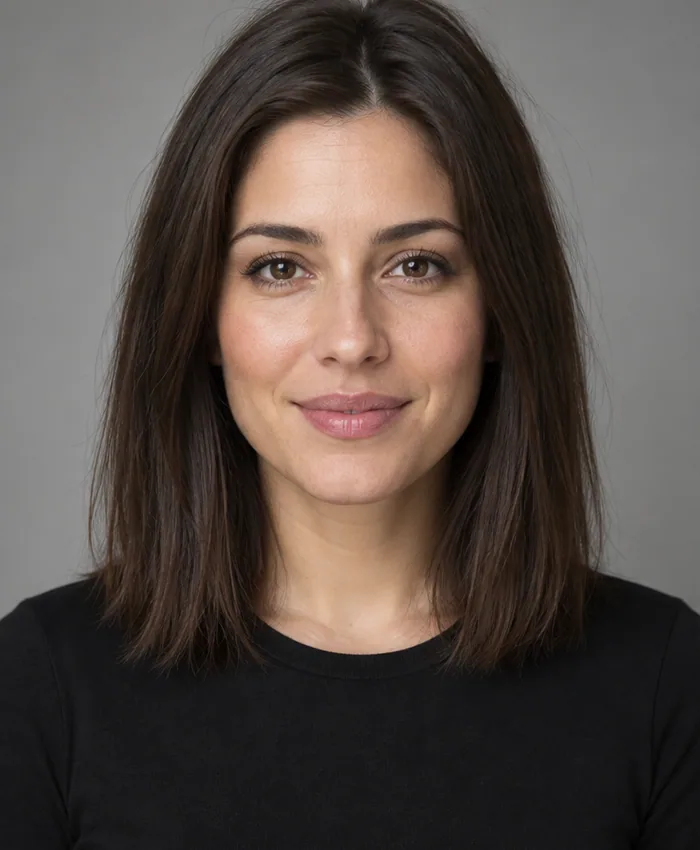 BeforeAfter · Loose curls
How we build these previews
So you know what you are comparing.
We built all 65 cuts in this library — 40on the women's reference model and 25on the men's — from 2 base photographs, one per model, rather than collecting 65 unrelated pictures. Every preview is an edit of that single base photo, so the face, skin texture, pose, clothing, background and lighting are identical across the whole library. The only variable is the hair.
Our method is deliberately constrained: the edit instruction forbids smoothing skin, slimming the face or changing the eyes, because a flattered “after” would make the comparison worthless. That is why the loose curls above can be read against any other cut here — same person, same light. The before-and-after pairs come from one photograph for the same reason, and when you upload your own picture we use that same pipeline, not a different one.
For the fit advice we measure the same way our face shape detector does: 478 facial landmarksread in your browser with Google's MediaPipe Face Landmarker, then compared against 7 reference shapes on fixed ratios — a length-to-width ratio of 1.6 or more reads as oblong, under 1.3 reads round or square, and a jaw at 92% of cheekbone width or wider reads as square. Nothing is uploaded for that step; it runs on your device.
What this cannot tell you:how your own hair will behave once it is cut. Density, growth pattern, cowlicks and the stylist's hand all change the result, and no preview predicts them. Plenty of faces also sit within a percentage point or two of those thresholds, so a small change in head angle can move the reading — treat the fit advice as a shortlist, not a verdict, then take the shortlist to a salon.
Updated November 2026. We revise a cut's page when the advice or the renders change, not on a schedule.
Loose curls questions
What size barrel gives loose curls?
32mm or larger for most lengths. Smaller barrels produce spirals; if your curls keep coming out tighter than you want, the barrel is the usual cause.
Why do my curls drop after an hour?
Almost always because they were released hot. Hold each curl in your palm until it is completely cool before letting it go.
Do loose curls suit a round face?
Yes if the curl starts below the jaw and the top is kept smoother, so the widest part of the hair sits below the widest part of the face.
Why does my curly hair look like a triangle?
The cut, not the curl. One-length curly hair collects width at the ends. Long layers with interior weight removal fix it.
Can I get loose curls without heat?
If your hair is naturally wavy, yes — curl cream on soaking hair, scrunch, and diffuse or air-dry without touching it. On straight hair, overnight braids or rollers give a looser, less uniform version.
How long should my hair be?
Shoulder length or longer. Below that a wide-diameter curl only gets one bend and reads as a flick rather than a curl.
Do loose curls work on fine hair?
Yes, but they hold for the shortest time. Use a larger barrel than feels right, because fine hair loosens as it cools, and keep product light so the curl is not weighed down.
How often should I cut hair I wear curly?
Every ten to fourteen weeks for the shape, but dust the ends more often. Curls make split ends more visible because the bend separates the strands.
Can I see loose curls on my own hair first?
Yes. Upload a front-facing photo to the hairstyle changer and pick loose curls; your face stays as it is and only the hair changes.
Should I brush out loose curls after styling?
Use fingers, not a brush. Fingers separate the curls while keeping each bend intact; a brush pulls the set out into a uniform wave and loses the diameter you spent time creating.
Related cuts
See the loose curls on your own face
Upload one front-facing photo. Your face stays yours — only the hair changes.
Try it free