Medium & long · medium length
Modern mullet: short sides, long back, no hard line
A modern mullet keeps the original's short sides and longer back but blends the two rather than stepping between them. The top is textured and worn forward or back, the length at the nape sits somewhere between the collar and the shoulder blades, and the whole shape is cut softer than the 1980s version it is named after.
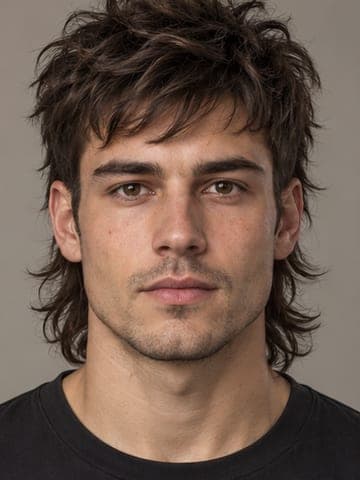
What a modern mullet actually is
The difference from the original is the transition. A classic mullet had a visible step where the short sides met the long back; the modern version runs a gradual blend through the side of the head so there is no line, and the back reads as a continuation rather than a separate section.
Length at the back varies more than any other part. A short modern mullet stops at the collar and is subtle enough to pass as a shaggy haircut; a long one reaches the shoulder blades and is unmistakable. Deciding this before the appointment is more important than any other detail.
The top is cut with heavy texture so it separates into pieces, which is what keeps the shape contemporary. Without that, a modern mullet reverts fairly quickly to looking like the original.
How it differs from the cuts people confuse it with
| Wolf cut | A wolf cut blends the sides and back into each other all round, with no distinct long section. A mullet keeps the back clearly longer. |
|---|---|
| Shoulder length | Shoulder length keeps the sides long too. The mullet's whole point is short sides against a long back. |
| Flow | Flow is swept back all round with even length. A mullet is deliberately uneven front to back. |
Who it suits
Keeping the sides short and the volume high adds vertical line, which is why round and square faces carry this well. The length at the back is not visible from the front, so it does not add width where a round face does not want it.
Texture is the bigger factor. Wavy and curly hair holds the blended transition with no styling, because the natural movement disguises where the short sides become the long back. Straight hair shows the transition more plainly and therefore needs a more skilled blend.
Thick hair suits it well once weight is removed; the cut has enough length at the back to carry bulk without looking heavy. Fine hair is harder, since the back can hang thin and separate into strands rather than reading as a section.
When not to pick it
- You work somewhere with a conservative dress code. The short-back version is subtle, but this cut is still read as a statement.
- Your hair is fine. The long back needs enough density to read as a section rather than as straggling ends.
- You want to tie it up. The sides are too short to reach, so only the back section gathers, which looks worse than leaving it down.
- You want a cut that grows out invisibly. The sides catch up with the back in a way that passes through several untidy months.
What to say in the chair
Naming the landmark and the length is what makes the request land.
- Decide the back length first and say it as a landmark: "length to the collar" for a subtle version, "to the shoulder blades" for a full one.
- Say you want it blended: "no hard line between the sides and the back, blend it through".
- Specify the sides as a guard or a length: "a 2 on the sides" or "scissor-cut short, about two centimetres".
- Ask for the top to be textured and say which way you wear it — forward, or back off the face.
- On a first mullet, ask for the back to be left longer than the target. The contrast can be increased next visit by taking the sides shorter.
Terms worth knowing
- Disconnection
- A deliberate hard step between short and long. This is the original mullet; say you do not want it unless you do.
- Blend
- A gradual transition with no visible line. The defining feature of the modern version.
- Weight line
- Where the hair starts to sit flat. Keeping it high at the back stops the long section hanging as a flat curtain.
Upkeep
| Styling time | 3–5 minutes |
|---|---|
| Back to the salon | 6–10 weeks |
| Effort | 2/5 · Low effort |
| What you need | A texturising or sea-salt spray · A matte paste for the top |
Styling is minimal: texturising spray through damp hair, air-dry or rough-dry, and a little paste to place the top. The cut is designed to look unfinished, so it rewards leaving it alone.
The maintenance interval is longer than it looks, because the back grows into the shape rather than out of it. What needs attention is the blend on the sides — once the sides catch up, the transition fills in and the contrast disappears. Asking for just the sides and the blend to be re-cut is quicker and cheaper than a full restyle.
Ways it gets cut
The same name covers several shapes. These are the ones worth naming at the salon.
Subtle mullet
Length stopping at the collar with the sides scissor-cut rather than clippered. From the front it reads as an ordinary shaggy cut, which makes it the version that survives a conservative workplace.
Clippered mullet
Sides taken to a two or three with a blend into the long back. Much higher contrast, far more obviously a mullet, and it needs the sides re-cut every three to four weeks to keep the transition from filling in.
Curly mullet
Relies on the curl to hide the transition, so the blend can be less precise and the cut holds its shape for longer. The back is left heavier than on straight hair, because curls lose visual length as they spring up.
Long mullet
Back reaching the shoulder blades. Unmistakable, and the version that takes longest to reverse, since the sides need close to a year to catch up with the back.
What it costs
The first appointment is a full restyle and priced like one, because the blend takes time to get right. After that you are paying for the sides and the transition rather than the whole head, which is a shorter and cheaper visit if you say that is what you want when booking.
Colours that suit it
Medium brown
Enough depth to show the blend down the sides, which is the part of the cut that distinguishes it from the original.
Balayage
Lighter ends at the back make the long section read as deliberate length rather than as hair that was not cut.
Jet black
Strong contrast makes the silhouette legible, which suits the more extreme, longer-back version.
How we build these previews
So you know what you are comparing.
We built all 65 cuts in this library — 40on the women's reference model and 25on the men's — from 2 base photographs, one per model, rather than collecting 65 unrelated pictures. Every preview is an edit of that single base photo, so the face, skin texture, pose, clothing, background and lighting are identical across the whole library. The only variable is the hair.
Our method is deliberately constrained: the edit instruction forbids smoothing skin, slimming the face or changing the eyes, because a flattered “after” would make the comparison worthless. That is why the modern mullet above can be read against any other cut here — same person, same light. The before-and-after pairs come from one photograph for the same reason, and when you upload your own picture we use that same pipeline, not a different one.
For the fit advice we measure the same way our face shape detector does: 478 facial landmarksread in your browser with Google's MediaPipe Face Landmarker, then compared against 7 reference shapes on fixed ratios — a length-to-width ratio of 1.6 or more reads as oblong, under 1.3 reads round or square, and a jaw at 92% of cheekbone width or wider reads as square. Nothing is uploaded for that step; it runs on your device.
What this cannot tell you:how your own hair will behave once it is cut. Density, growth pattern, cowlicks and the stylist's hand all change the result, and no preview predicts them. Plenty of faces also sit within a percentage point or two of those thresholds, so a small change in head angle can move the reading — treat the fit advice as a shortlist, not a verdict, then take the shortlist to a salon.
Updated November 2026. We revise a cut's page when the advice or the renders change, not on a schedule.
Modern mullet questions
What is the difference between a mullet and a modern mullet?
The transition. A classic mullet steps from short sides to a long back with a visible line; the modern version blends them so there is none.
How long should the back be?
Collar length for a subtle version that reads as a shaggy cut, shoulder-blade length for an unmistakable one. Decide this before the appointment.
Does a modern mullet suit a round face?
Yes. Short sides and volume on top add vertical line, and the back length is not visible from the front, so it adds no width.
Will it work on straight hair?
Yes, but the blend has to be better. Straight hair shows the transition between short sides and long back plainly, where waves disguise it.
How often do the sides need re-cutting?
Every six to ten weeks. The back grows into the shape rather than out of it, so what needs attention is the blend on the sides — once they catch up, the contrast disappears.
Can I tie a mullet back?
Not usefully. The sides are too short to reach, so only the back gathers, which looks worse than leaving it loose.
Is a mullet unprofessional?
The collar-length version passes as a shaggy haircut in most settings. The shoulder-blade version is a statement and will be read as one.
How do I grow a mullet out?
Let the sides catch up and have the back dusted to keep the proportions sensible. Expect several untidy months in the middle.
Can I preview a modern mullet on my photo?
Yes. Upload a front-facing photo to the hairstyle changer and pick the modern mullet; only the hair changes.
What is the difference between a modern mullet and a shag?
A shag is layered evenly all round with no front-to-back difference in length. A mullet keeps the sides deliberately short against a clearly longer back, even when the transition between them is blended.
How short should the sides be?
A two or three guard gives high contrast and an obvious mullet; scissor-cut at around two centimetres gives a softer version that reads as a shaggy cut from the front. The sides decide how loud the whole thing is.
Does a modern mullet need product?
Very little. Texturising spray through damp hair and a small amount of matte paste on the top is the whole routine, and the cut is designed to look better slightly undone than freshly styled.
Will a mullet suit fine hair?
It is the hardest case. The long back needs enough density to read as a section; on fine hair it tends to separate into strands and look straggly rather than deliberate. Keeping the back shorter, at collar length, helps.
Can I grow a mullet out of a short back and sides?
Yes, and it is the usual route. Keep having the sides cut on their normal schedule and leave the back completely alone; after about four months the difference is enough for a stylist to shape it into a blend rather than a step.
Is a mullet harder to maintain than a short cut?
It is cheaper and less frequent than a fade but not maintenance-free. The sides and the blend need attention every six to ten weeks, and the back needs dusting a couple of times a year so the ends do not thin out into points.
Related cuts
See the modern mullet on your own face
Upload one front-facing photo. Your face stays yours — only the hair changes.
Try it free